

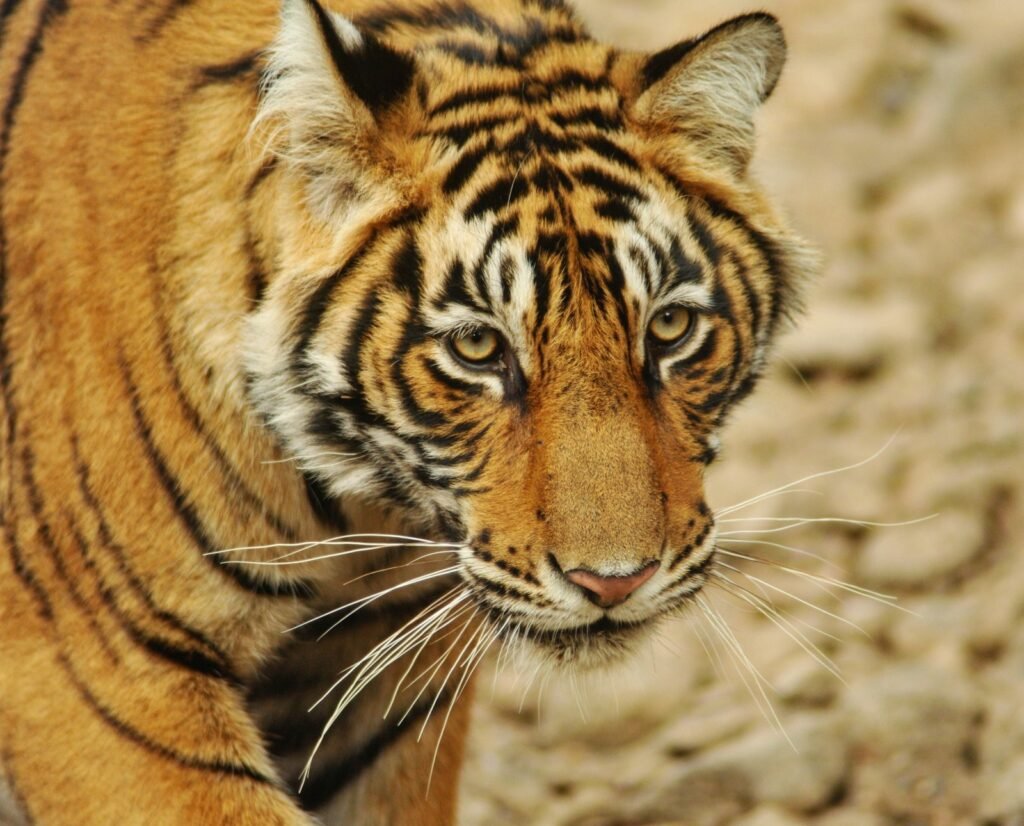
Ranthambore’s tigers live in a forest full of history. Ruined palaces, step wells and chhatris stand along the safari tracks, and a thousand-year-old fort looks down on the lakes.
The fort
Ranthambore Fort was built on a hill inside the forest around the 10th century. It is best known for Rao Hammir Dev of the Chauhan dynasty, who defended it against Alauddin Khalji in 1301. Today it is a UNESCO World Heritage Site, one of the Hill Forts of Rajasthan. See our fort guide.
A royal hunting ground
For centuries the forest belonged to the rulers of Jaipur and was kept as a private hunting reserve. The lakes, the Jogi Mahal and the hunting lodges you pass on safari date from that time.
Protection begins
- 1955: declared the Sawai Madhopur Game Sanctuary
- 1973: one of the first reserves under Project Tiger, India’s national tiger conservation programme
- 1980: declared Ranthambore National Park
- Later the neighbouring Kaila Devi and Sawai Man Singh sanctuaries were added to form the larger tiger reserve
Villages and recovery
Villages that once stood inside the park were relocated, and the forest recovered. Tigers that had been shy and nocturnal began to hunt in daylight, and Ranthambore became famous for tigers seen in the open, by the lakes and among the ruins.
Famous tigers
The best-known of all was Machali (T-16), the queen of the lakes, whose family still holds the same territory. Read Machali to Riddhi: four generations of the lake queens.
Ranthambore today
Tigers from Ranthambore have helped restock other reserves in Rajasthan and beyond. The park remains a working example of how protection, local people and tourism can sustain a tiger population. Your permit fee is part of that system.