
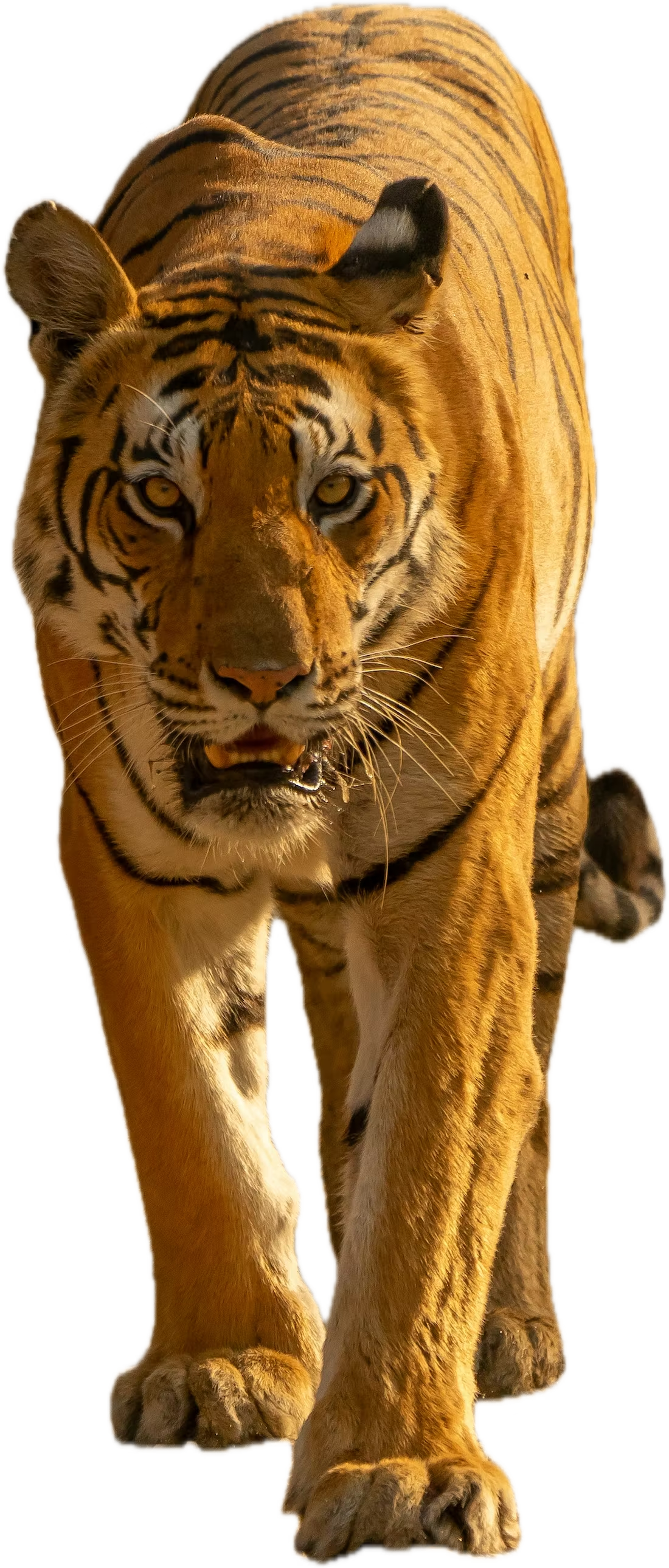
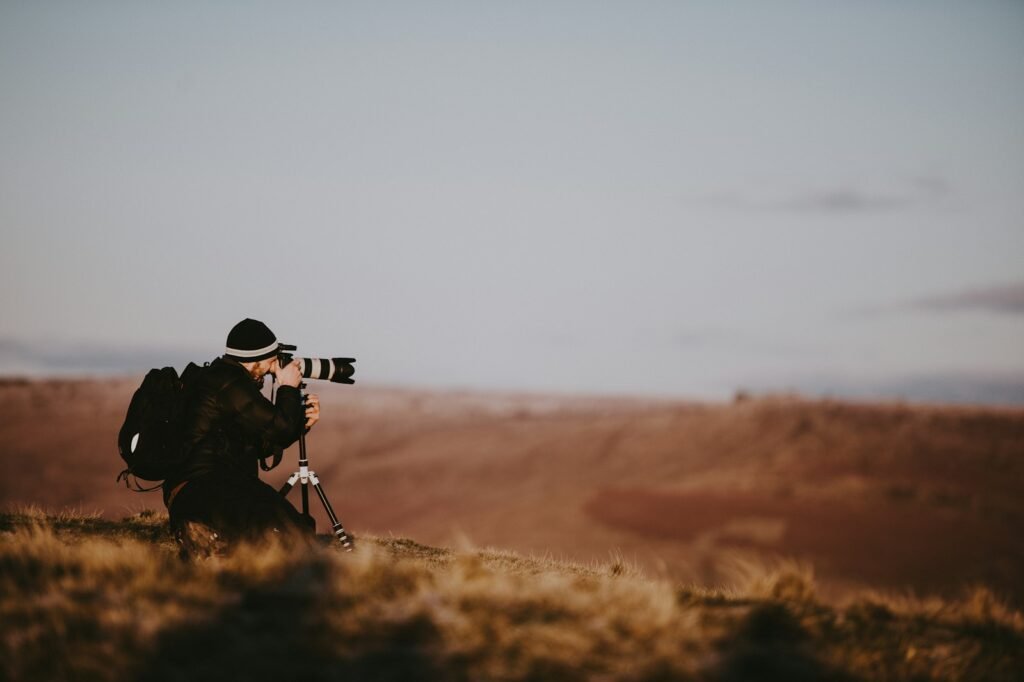
Ranthambore’s open forest and famous lake country make it one of India’s best parks for tiger photography. A little preparation helps you make the most of the few minutes that matter.
Choose the right vehicle
A Gypsy is the photographer’s choice: six seats, less movement, and the driver can position for light more easily. If you are serious, ask about booking all seats in a Gypsy for your group.
Lenses
- 100–400 mm or 150–600 mm zoom: the most useful all-round lens
- 70–200 mm: good for habitat shots and animals close to the track
- Wide angle or phone: for landscapes, the fort and the lakes
- Change lenses before the drive; dust gets in fast
Settings that work
- Shutter speed at least 1/1000 s for moving animals, 1/500 s for still ones
- Auto ISO with a sensible upper limit; morning and dusk light is low
- Continuous autofocus with a small focus area on the eye
- Burst mode for walking or yawning tigers
- Shoot RAW if you can
Light and timing
The first hour of the morning and the last of the evening give the warmest light. Lakes reflect beautifully in still morning air. In summer, waterholes give long, close sightings. See morning or evening?
Support and protection
- A beanbag on the vehicle rail is steadier than a monopod
- Rain cover or cloth for dust
- Blower and microfibre cloth
- Spare batteries and cards; there is no charging in the vehicle
Ethics
No flash, no calls or noises to make an animal look up, no asking the driver to block a tiger’s path. The best photos come from patience, and the animal’s comfort comes first. Read the safari rules.